University Arts Building - University of Nevada, Reno
Client |
University of Nevada, Reno | |
Location |
||
Size |
||
Designer |
||
Award |
This project is part of a legacy of construction excellence built at a respected Nevada contractor, now carried forward by the Plenium Builders team.
Building at the Heart of Campus
Tucked into a narrow sliver of land in the center of campus, bordered tightly on three sides by existing buildings and active pedestrian corridors, the University Arts Building demanded precision before the first footing was placed. Limited laydown space, sloped topography, and adjacent construction activity required carefully choreographed logistics and just-in-time material sequencing from the outset. The construction team coordinated deliveries down constrained access roads while maintaining campus circulation and safety. Storage was minimal. Every trade operated within a lean framework, staged in carefully timed intervals to keep work moving without overwhelming the site.
Engineering for Quiet
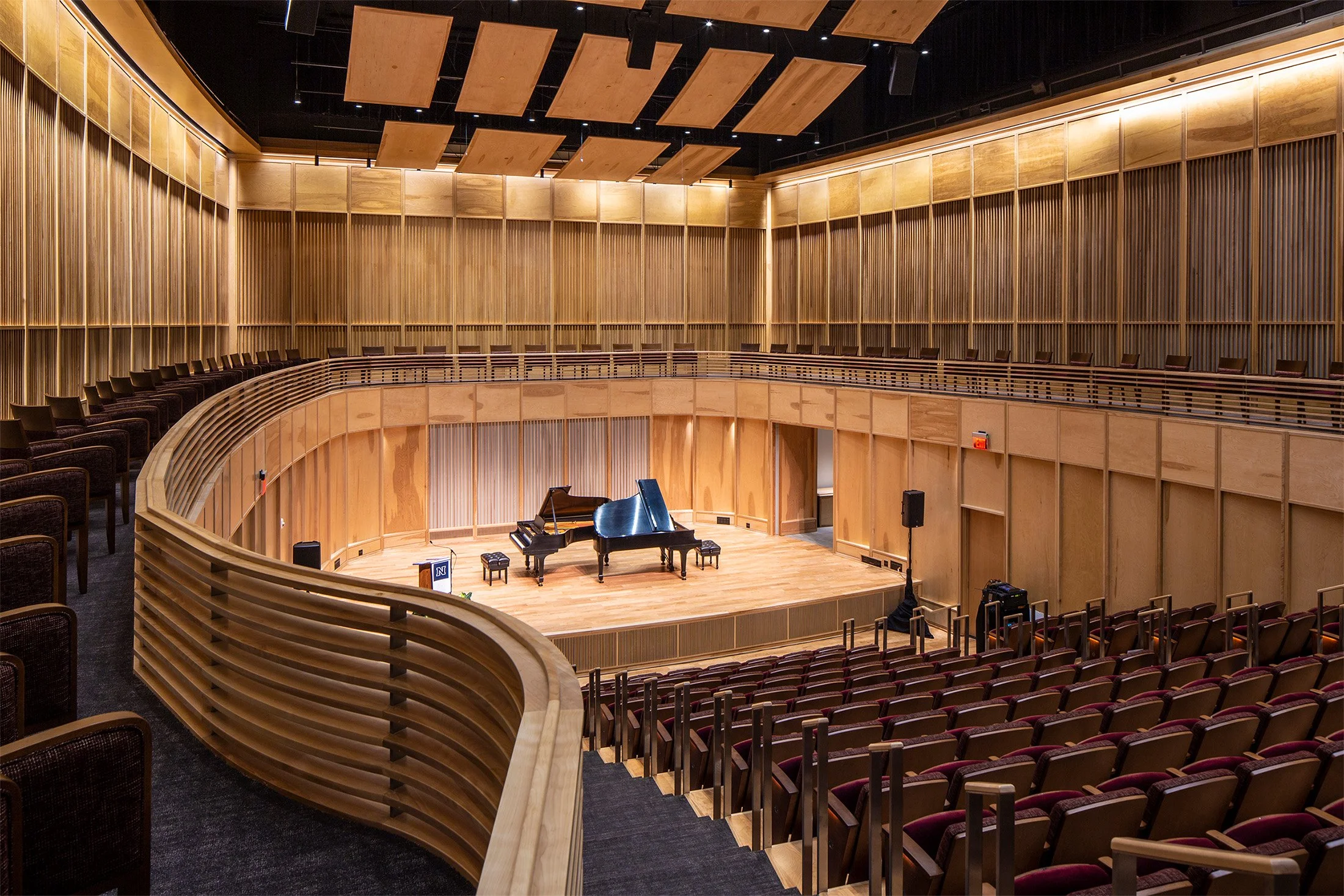
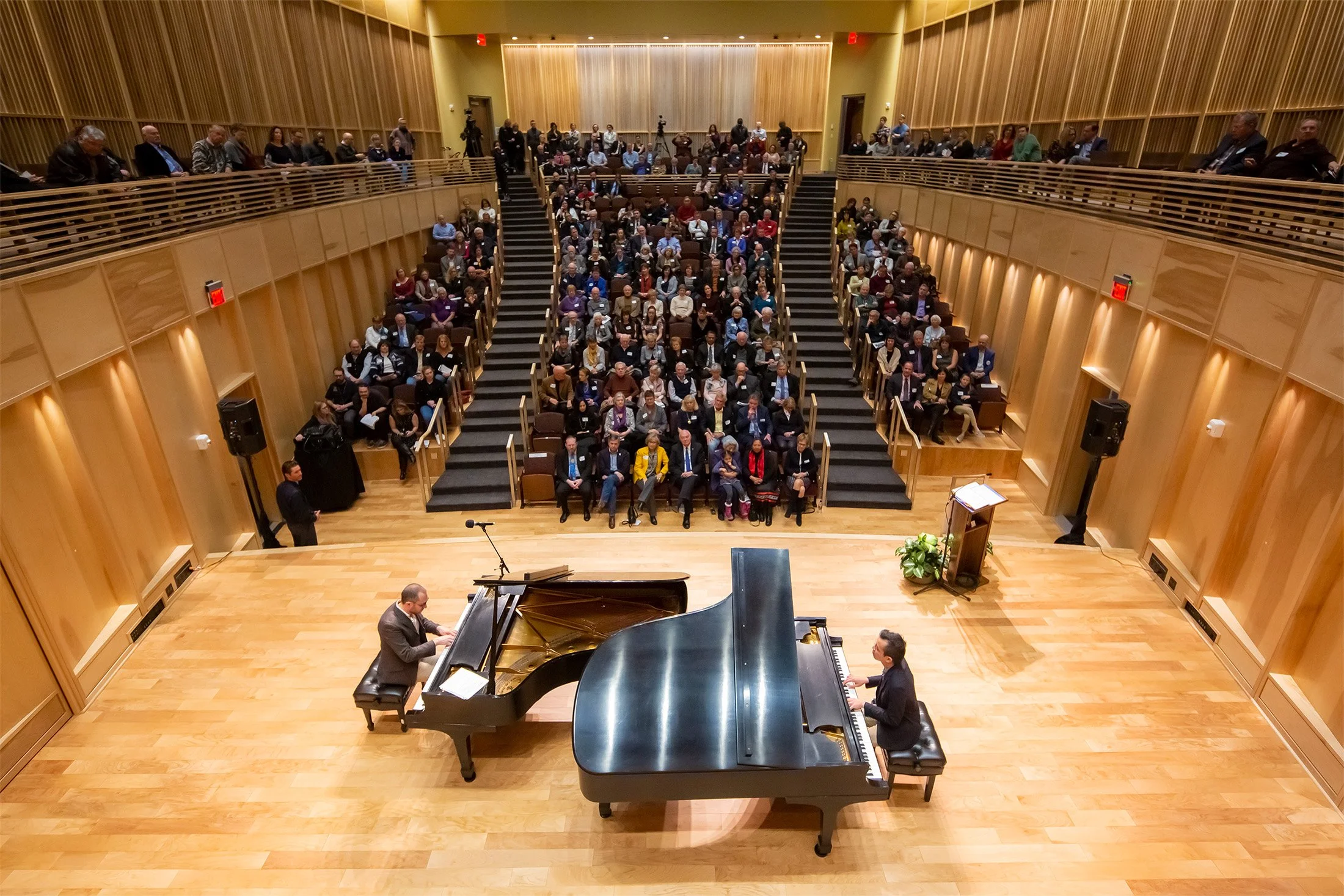
The 287-seat recital hall rises as a three-story volume designed to deliver exceptional acoustic performance. Constructing it required uncommon coordination and quality control across every system.
All structural connections within sound-sensitive spaces incorporated vibration-isolation clips. Mechanical, electrical, and plumbing systems were detailed to prevent background noise transfer. Air distribution for the hall was embedded below the slab and delivered through round grilles beneath seating, eliminating the turbulence and vibration typical of conventional systems.
Because the ceiling space housed complex mechanical, lighting, acoustical, and theatrical assemblies, crews constructed a full scaffold platform—commonly referred to as a “dance floor”—immediately after roof structure completion. This temporary working deck allowed multiple trades to install and inspect overhead systems months before the remainder of the hall was built out. Once complete, the scaffold was removed and finish work proceeded below.
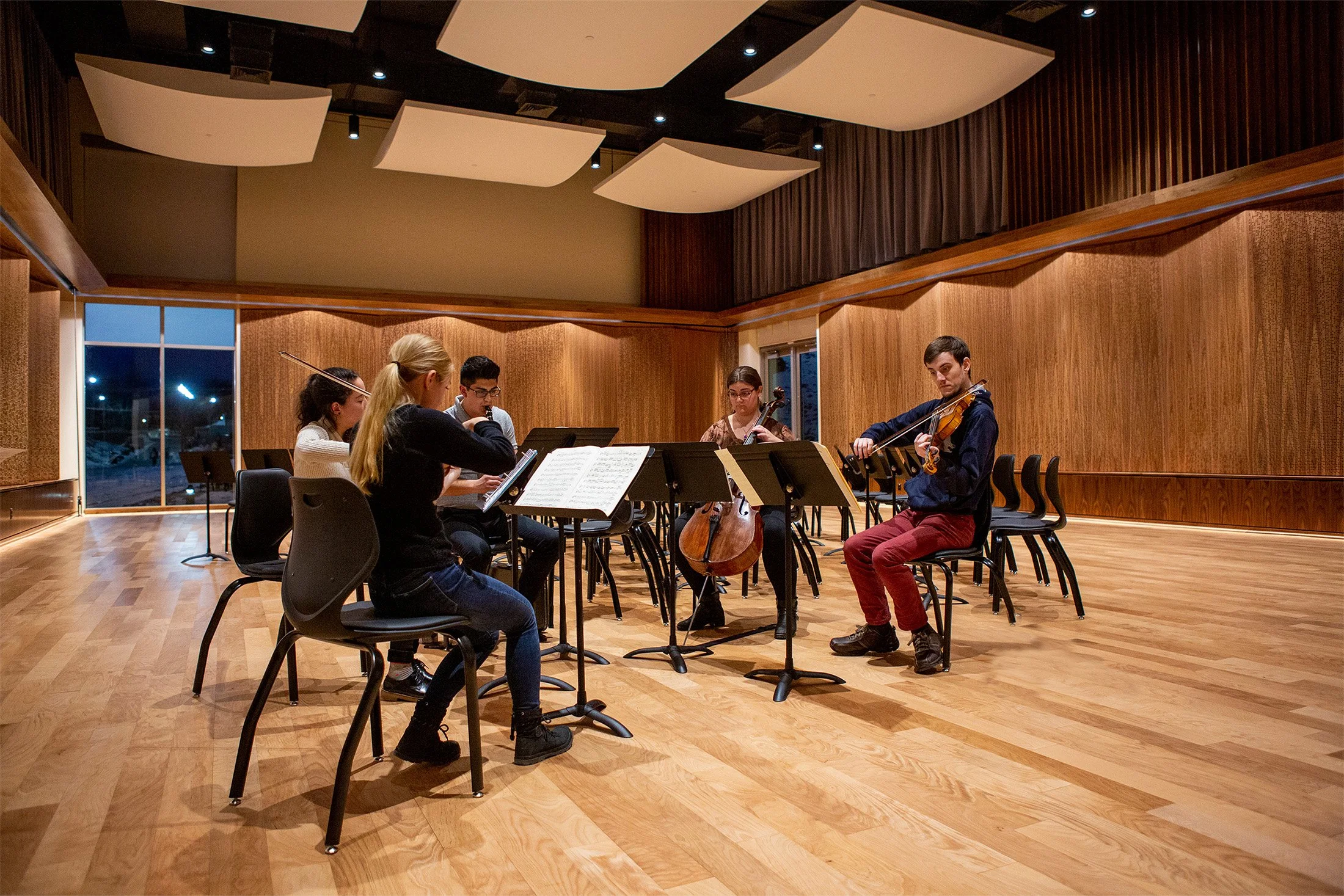
Early mockups and rigorous inspections verified the layered acoustic assemblies before enclosure. Slab isolation in recording booths, stud spacing, panel alignment, and attachment details were closely monitored to maintain acoustic integrity through every phase of work.
Craft at Scale
Large expanses of uninterrupted brickwork were essential to align the building with the University’s architectural character. At the same time, regional labor shortages placed pressure on masonry production and schedule.
To address both concerns, the team deployed SAM100, a semi-automated masonry robot, for the first time in Nevada. Operating from an electric scaffold that raises in 12-inch increments, the robotic arm butters and places each brick with laser-guided precision while masons manage loading and quality control.
SAM100 laid approximately 66 percent of the building’s 100,000 bricks, placing nearly 2,500 bricks per day compared to the average 500 installed by a fully manual crew. The system achieved tight joint tolerances and consistent flatness while reducing scaffolding and improving site safety. Skilled masons remained integral to alignment, detailing, and finish quality throughout installation.
Coordinating Complexity
The museum space incorporates acoustical decking and humidity control systems integrated within structural assemblies. Air utilities were embedded within foundation pours alongside power and plumbing, requiring detailed inspection prior to placement.
From constrained site logistics to acoustically isolated interiors and technologically advanced masonry installation, the project required steady coordination across every trade to deliver a facility that performs quietly and precisely at the center of campus life.